
.jpg)

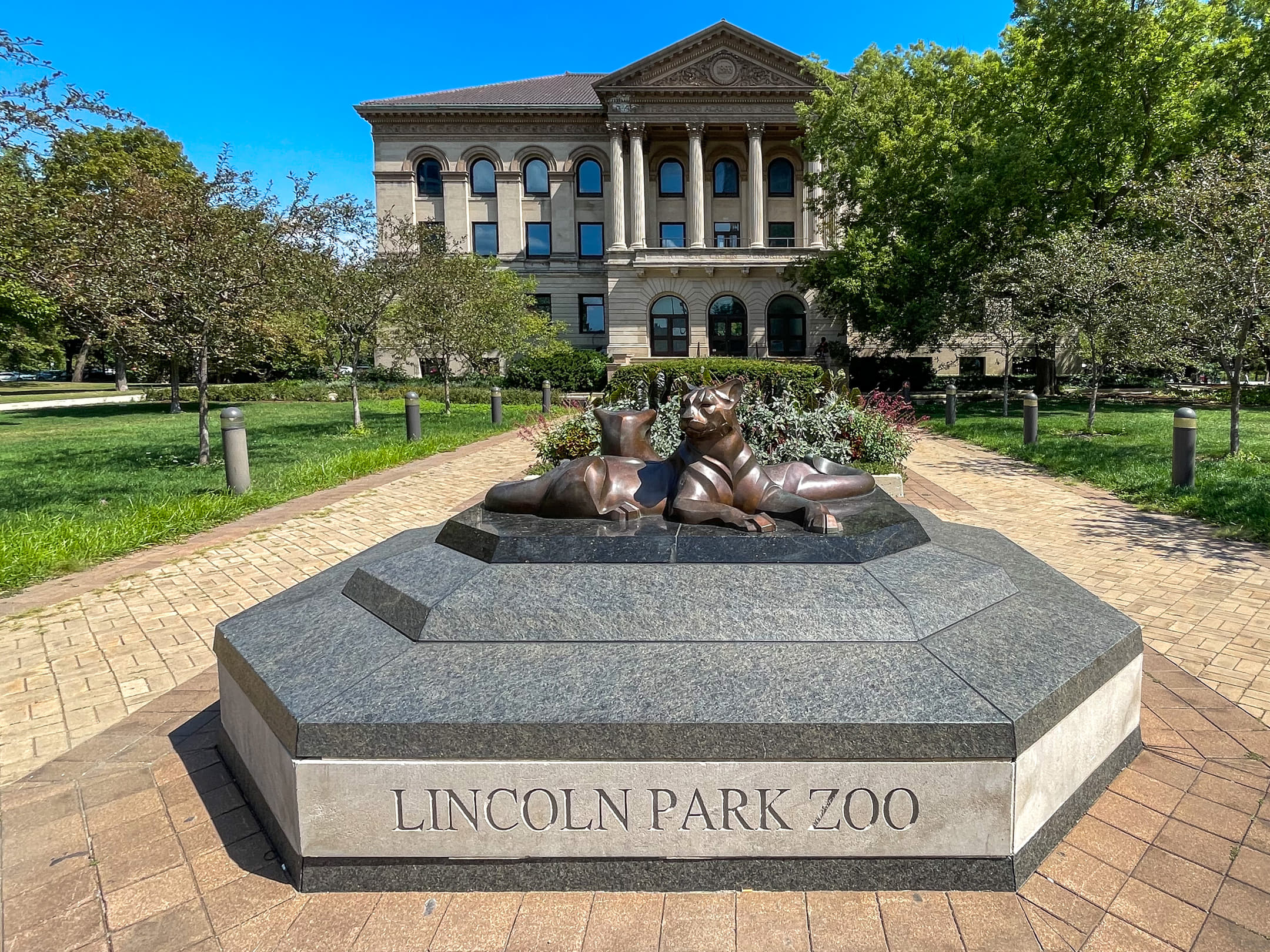
Overview Of Lincoln Park Zoo
Animals In Lincoln Park Zoo
.jpg?w=340&dpr=2)
Aardvarks have long tails, prominent snouts, enormous meaty ears, and long, sticky tongues that may fit within termite mounds to snare prey. These unusual creatures are grey with sparsely-haired bodies. They weigh 120 pounds and have a maximum length of four feet. Being nocturnal, they spend the day sleeping and foraging for food. They are territorial, solitary creatures that only associate to reproduce. Newborns are born in the females' burrows and spend several weeks maturing underground.

Long-legged Abdim's storks have black feathers with white accents under their wings, and their eyes are surrounded by a brilliant red patch on their blue face. These storks are among the tiniest, although they are still over three feet tall, with females being smaller than males. Due to their propensity to eat grasshoppers, Abdim's storks are sometimes called "grasshopper birds." They also consume mice, crabs, eggs, caterpillars, tiny reptiles, amphibians, locusts, and caterpillars.
.jpg?w=340&dpr=2)
African lions are large predators that can weigh up to 500 pounds. Males may be identified by their mane, which covers their heads and goes down to their chests. The species reproduces continuously, and males compete for the right to reproduce with female feelings of pride. Young males frequently join together to take leadership of pride, with more muscular males driving out weaker ones in conflicts. A pride's female members can assist one another in taking care of their pups because they frequently give birth close together. Cubs are kept hidden and dependent on adults until they are 16 months old.
.jpg?w=340&dpr=2)
Smaller than other penguin species, African penguins are roughly 18 inches tall and weigh about seven pounds. They can move across the water using their mighty, flipper-like wings and webbed feet. Their dense bones allow them to swim more efficiently, and the spines on their tongue enable them to grab prey. Their distinctive black-and-white plumage, which blends into the water from above and the sky from below, conceals them from predators and prey when submerged in water.

The coats of African-painted dogs are intricately patterned with red, yellow, white, brown, and black hues. Adults may weigh up to 80 pounds and grow as long as three and a half feet, making them nearly the same size as large domestic dogs. They can hunt and dwell in bands of up to 30 individuals, which enables them to take down much larger animals like zebras, gazelles, and impalas. Although the pack shares parental responsibilities, the alphas are often the only ones to reproduce.

American black bears may grow to six feet long, weigh up to 600 pounds, and range in hue from black to brown. They are solitary creatures that wander vast, frequently overlapping ranges. Although they are considered carnivores, they frequently consume a more omnivorous diet, including grasses, berries, insects, fish, animals, and carrion. Females give birth to two or three cubs in the winter and care for them until spring. Before setting out on their own, cubs spend a couple of years living with the female.
Gardens at Lincoln Zoo Park

The Conservation & Science Gardens, located immediately north of McCormick Bird House, are surrounded by old and juvenile river birches and include a wide variety of attractive plants, both native and non-native. Over time, their planting areas have grown, taking the place of turf grass that wasn't the ideal fit for the shade beneath the expanding trees. Explore the various plant life and ecosystems at Lincoln Park Zoo with other outdoor enthusiasts on a free, guided tour.

Dream Lady is a 2013-planted allee of Prairiefire crab apples that beautifies Helen Brach Primate House's north entrance. This bright, formal garden was renovated in 2014 owing to the generosity of John Alexander, and it's a terrific site to take in yearly container displays. A zoo gardener will answer visitors' queries, point out unusual plants in bloom, and talk about the program's past, present, and future throughout each tour.

With a display of native perennials, the Chaddick Foundation Welcome Garden, established in the summer of 2018, greets visitors to the Pritzker Family Children's Zoo. Although sunlight occasionally pierces the trees to create a bright south end of the garden bed, shade-tolerant plants flourish beneath the tall pine trees, whose dropped needles act as a natural mulch.

The Charles Schwartz Memorial Garden is a sprawling hillside visible from the terrace of Park Place Café. It was renovated and planted in the spring of 2019. Throughout most of the growing season, sunlight passes through a soaring Freeman maple before bathing a "river" of Brookside geranium blossoms. Fall is when ornamental grasses blossom, and their seed heads last all winter.
Know Before You Go To Lincoln Park Zoo

- **Location**
2001 N Clark St, Chicago, IL 60614, United States. The initial half hour of parking is free. After that, daily charges are between $20 and $35, including any necessary parking fees. Prices might change at any time.[5] [A6]
- **Timings**
From 6 a.m. to 11 p.m., the parking lot is open. The public is welcome to visit the zoo daily from 10 a.m. onwards.
- **How to Reach**
By Bus: The 22, 36, 151, and 156 buses have stops near the zoo's western boundary.
By Trains: The Armitage station on the Brown and Purple lines and the Fullerton station on the Red Line are located about a mile west of the zoo.
By bicycle: Near the East Gate, West Gate, North Gate, and Café Brauer Gate are bike racks. Cannon and Stockton Drive also have bike racks. There are also a lot of Divvy stations close by.
FAQs
What are the operating hours of Lincoln Park Zoo?
The zoo is open every day of the year. The general operating hours are from 10:00 AM to 5:00 PM, but it is advisable to check the zoo's website for any changes or special hours.
Can we touch or feed the animals in Lincoln Park Zoo?
For the well-being of the animals and the safety of visitors, touching or feeding the animals is generally not allowed. However, there may be designated areas or animal encounters where supervised interactions are permitted.
Is photography allowed in the zoo?
Yes, photography is allowed for personal, non-commercial use. Visitors are welcome to take photographs of the animals and exhibits. However, the use of tripods and other professional equipment may require special permission.
Why Lincoln Park Zoo is famous?
Lincoln Park Zoo is famous for being one of the oldest and most renowned zoos in the United States. It is known for its commitment to animal welfare, conservation efforts, and free admission policy. The zoo's diverse collection of animals, educational programs, and beautiful park-like setting have made it a beloved destination for families, nature enthusiasts, and animal lovers.
How long should one spend in Lincoln Park Zoo?
The duration of your visit to Lincoln Park Zoo can vary depending on your interests and preferences. On average, visitors spend around 2 to 4 hours exploring the zoo and enjoying its exhibits. However, if you wish to participate in additional activities, such as attending zookeeper talks, guided tours, or animal encounters, you may want to allocate more time. It's best to plan your visit based on the experiences you want to have.